Age 3 - 6
The three-year cycle is a fundamental element of Montessori education. The children begin our Primary Program at three years old and finish at Kindergarten.
This finished website is ready. Pick the monthly plan you want and activate it without scheduling a call.
We run your website for you.
We run your front desk for you.
We run your front office for you.
You'll be taken to secure card checkout (Stripe). The website, hosting, and owner portal activate automatically after payment. Texting switches on once the carriers approve your registration, usually 1–2 weeks. See everything in each plan →
Your website is saved. Please try secure checkout again in a few minutes — no call is required.
Your owner account is being activated and the clean production version is publishing automatically. Watch your email for the portal invite.
A three-year cycle for children aged three through kindergarten.
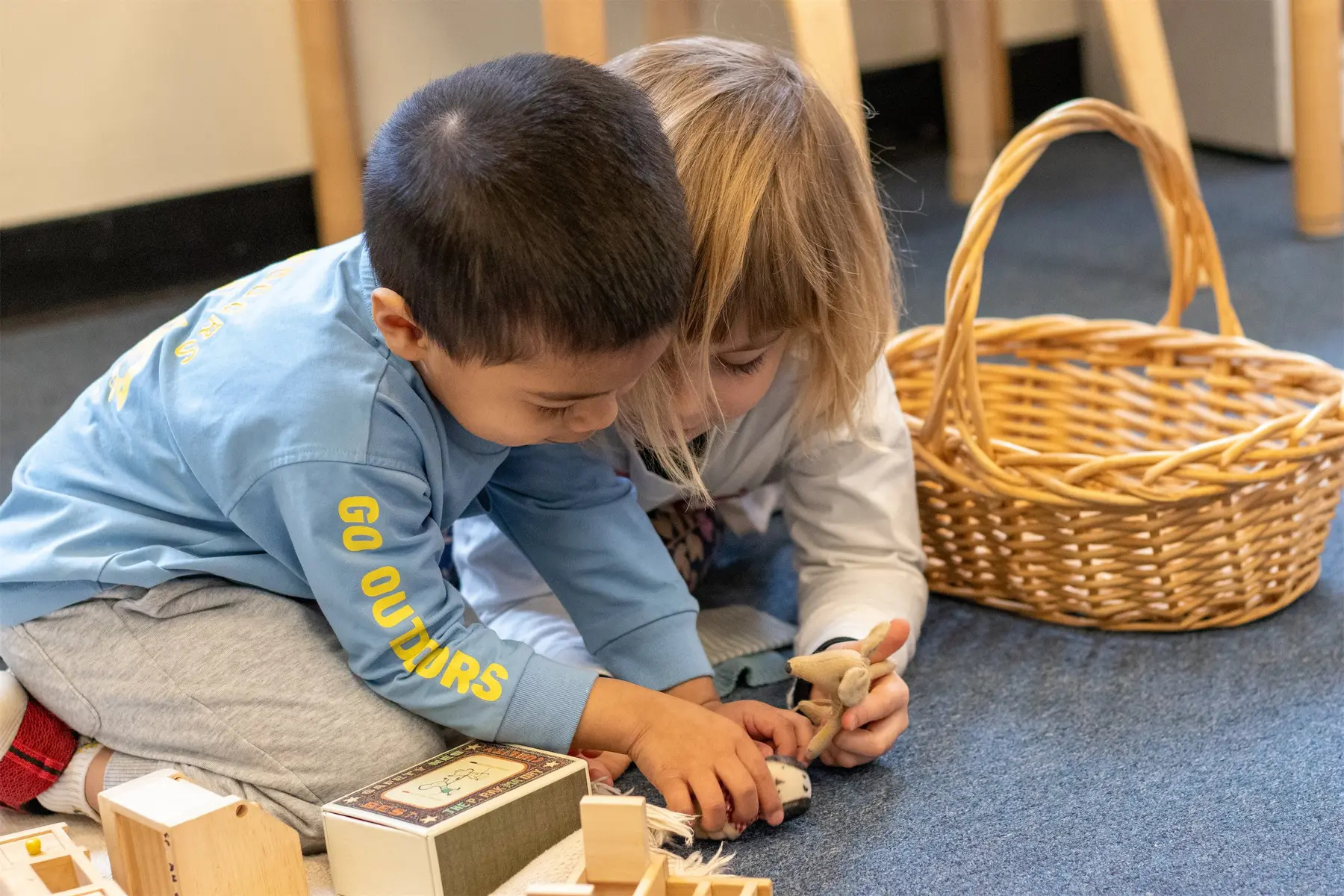
In the Primary room, children aged three to six work with hands-on materials in Practical Life, Sensorial, Language, Mathematics, and Culture. The day supports independence, respect, and a growing love of learning.
A child stays in the same room for three years, finishing at kindergarten. The younger children watch and learn from the older ones; the older children become leaders and role models. They choose work alone or in small groups, staying with a task until it is complete.
After a structured morning, Primary children have lunch, more advanced academic activities, cultural explorations, and creative play. An Extended Day option is available.
The three-year cycle is a fundamental element of Montessori education. The children begin our Primary Program at three years old and finish at Kindergarten.
Practical Life is the keystone of the Montessori Method and the building blocks for Sensorial, Math, Language, and Culture. It uses simple daily activities with familiar objects and tools. Children build attention span by engaging in work they choose for themselves. The purpose is to develop coordination, concentration, independence, order, and fine and gross motor skills.
Maria Montessori wrote that the hand is the instrument of the mind. She believed children take in information through their senses, and the Sensorial materials offer a multi-sensory approach to learning. They help a child internalize size, shape, color, sound, similarities, and differences. These skills provide a basis for later work in math, music, and language.
The environment supports the sensitive period of language through the Language materials and those in Practical Life, Sensorial, and Cultural areas. Lessons cover oral and auditory language, writing, and reading. Language education begins with oral and auditory activities, then moves to phonic reading starting with initial sounds. Children take part in active, pleasant conversations that build a strong vocabulary.
In the Mathematics area, children move from concrete to abstract mathematical explorations. The materials let them learn three primary areas.
In the Montessori environment, cultural awareness is important for establishing a child's sense of place within the world. Cultural development enables the child to unite and bring the world into the classroom. Materials and stories open geography, nature, and the traditions of many peoples.
A Primary day has a long, unhurried morning of work. Children choose activities from the shelves, carry their materials to a table or mat, and stay with a task until it is finished. A teacher gives lessons to one child or a small group, then steps back.
The benefit shows up at home in small ways. A child pours a drink without spilling, buttons a coat, waits a turn, and puts work away before starting something else. Those are signs of concentration and independence that build over the three years.